I believe we are all experts when it comes to sexuality, and that the most interesting sex education comes from listening closely to the everyday experiences of as many people as possible. Sexuality is a social force, created daily through our interactions with the culture around us. To inform my teaching as a sex educator, I try to talk to as many people as possible, listening closely to the intimate details people are willing to share with me. So many folks are hungry for a compassionate ear and I tend to get into very personal conversations with strangers everywhere I go. One time, I had such an intimate conversation with a woman on the train that by the time we arrived at her stop she was in tears and citing a “breakthrough moment!”
Blogging is a powerful way for me to share my ideas and insights as a sex educator but is also a practice in listening. Towards that end, I’ve shifted my blogging efforts over to a new platform at one of the largest sex and relationship sites online, YourTango.com. I’ll be blogging over there and participating in the vibrant community so I can continue to both share my own wisdom and benefit from the community conversation. Below are links to my first few posts on the site, and I’ll continue to leave short posts here with links to the full articles. One of the benefits of blogging at YourTango is the comments will be open, so I look forward to hearing from my readers with their responses and ideas.
Cheers!
Fantasy Vs. Desire: The Crucial Difference


 Very few people have sex as often as they want. I certainly don’t, and I work from home and spend my days thinking, writing and speaking about sexuality. So why don’t I make more time for sex? Why don’t you?
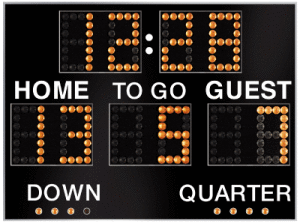 Is there an imaginary scoreboard above your bed? Many couples act as if they need to stay “even” when it comes to giving and receiving pleasure. Yet, reciprocity is not a one-for-one exchange. It is important to make sure both of your needs and desires are being acknowledged, but you may also find that there is a natural balance within your relationship, or phases of your relationship, that are not “equal.” Balance does not have to be symmetrical. What is essential is to check in with yourself and one another and make sure you are not developing any resentment about how much pleasure one person is receiving and how much stimulation the other is giving. If you are both satisfied and fulfilled by your sex life, that is indeed an accomplishment of a harmonious balance.